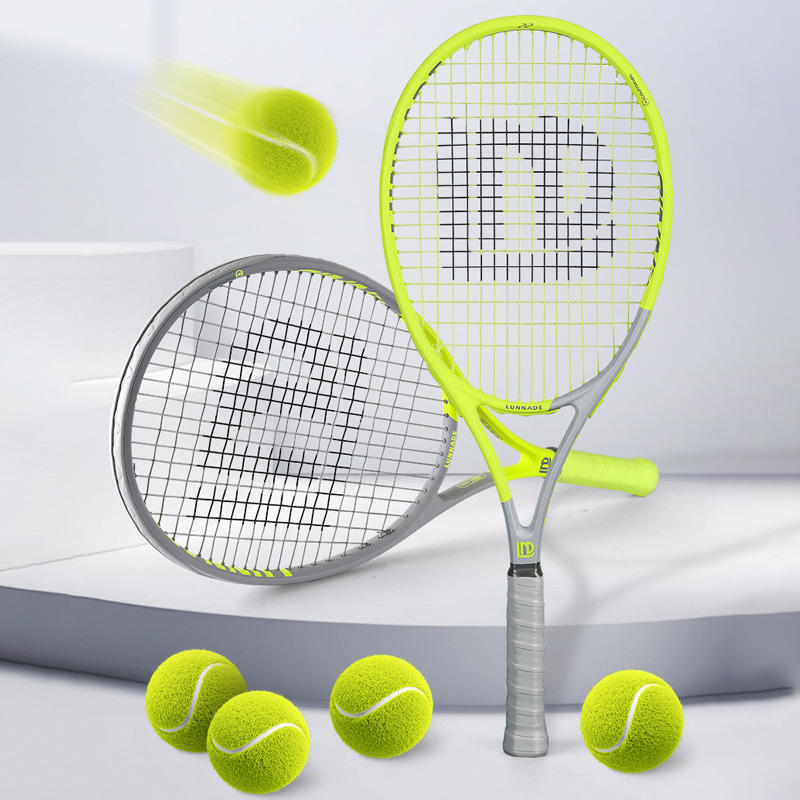
To evaluate the condition of a tennis ball, one of the easiest methods is to determine how predictable the ball is when bouncing. Tennis balls should have a predictable bounce. Using a tennis ball, drop it from a height of around the waist onto a hard surface. Its bounce should reach a height of about the knee. If the bounce is less than knee height, the ball's internal pressure has probably been lost. A ball that bounces inconsistently is either a sign of core damage or damage to the outer covering. No matter the purpose of the tennis ball, whether for tennis matches or practice, this activity is a good evaluation method. A tennis ball should have a consistent bounce, as this improves the quality of each of your shots while also ensuring that rebounds are predictable.
When playing with a tennis ball, the outside cover of the ball is important to grip, spin, and durability. to inspect the outside cover, a player should look for any signs of wear and tear. Good balls should have a complete felt covering without any bald patches, tears, or extreme fuzziness. If there are bald patches or felt is peeling, the ball is probably worn out. Another thing to check is the discoloration. Some rough dirt is fine, but if the ball is severely yellowed or you see dark stains that don’t come off, the ball is probably older than you want. If you need the precision, a worn out cover is simply not acceptable. It is literally the difference between hitting your shots with the spin and trajectory you want, or hitting your shots with a random spin and trajectory. This is the difference between a consistent effective game and not.
A tennis ball’s internal pressure keeps it bouncy and playable. Even if the ball looks brand new and the exterior feels firm, low pressure means the ball is unsuited for any competitive play. Conduct a pressure test by squeezing the ball with your thumb and forefinger. An acceptable ball will feel firm and pressure will be required to flatten the ball somewhat. If the ball feels soft or is so hard that it cannot be deformed from other pressure, then the pressure is off. Another way to test pressure involves bouncing the ball to see if it makes a high-pitched noise. If the ball hits the ground and makes a soft, muted thud, it is low compressed. Making sure the balls retain bounce and perform best. High quality tennis balls will keep internal pressure longer, thus extending the number of matches played.
How long and where you play with a tennis ball influences its lifespan. Even the highest quality tennis balls will lose their bounce and fall apart more when in play on a rough surface asphalt. If you play on hard courts more than the other surfaces look for balls that are more durable. They have a thicker felt and often, but not always a reinforced core Storage is also just as important. Keep your balls in a cool, dry place. They should not be in direct sunlight or near a source of heat. Leaving your balls in a hot car or a damp bag can also speed up the breakdown of the internal materials, erase the internal pressure and shorten the lifespan of the balls Of course, for the more casual player this means getting a higher use out of a pack of tennis balls, and for the professional this means that every ball in play will perform at its prime. Balls that have been designed with durability and have proper storage guidance advise are value balls as you will not have to replace them often.
To get an accurate assessment of a tennis ball, you need to use it during an actual match. Start with an evaluation of the ball's performance with each of your shots. Is it responsive when you hit a topspin forehand, or does it lose spin quickly? Is the ball lockdown range or does it travel speedily front to back or side to side? You should be able to feel the ball's responsiveness to your control of the shot power and precision. When a ball loses spin during a rally or starts feeling “dead”, especially at a competitive level, it will perform poorly and need replacing. It is even more important to not lose your strategy when using a ball of high consistent quality. Even in more casual tennis, a high quality ball increases the enjoyment of the game. Quality tennis balls increases the value of your time on the court by giving you better control and lasting longer during a rally. Every shot is more enjoyable, and a quality ball will allow you to control that every shot.
Finding the right tennis balls is all about narrowing down options based on pricing without sacrificing quality. Of course you don’t want to buy the most expensive products on the market, but extremely cheap balls will become a headache due to their rapid replacement cycles and inconsistent performance. You want to find a happy medium. Ideally, these balls will survive several matches while holding pressure, and maintaining a decent bounce every ball is struck. Brand names are usually an indicator of better value, as these are the companies who will be investing in higher quality materials. While these premium options will be more expensive on the first purchase, their longevity will ultimately save more in ball-replacement costs over time. Whether you’re more of a casual, or competitive player, quality value is the same. It’s getting the most durability and performance enhancement from every dollar without straining your finances.
 Hot News
2025-12-31
2025-12-29
2025-12-26
2025-12-24
2025-12-22
2025-12-19
 EN
EN